What Customers Want From a Conveyancer: Survey Findings for Agents and Brokers
27 October 2026 • 5 min read
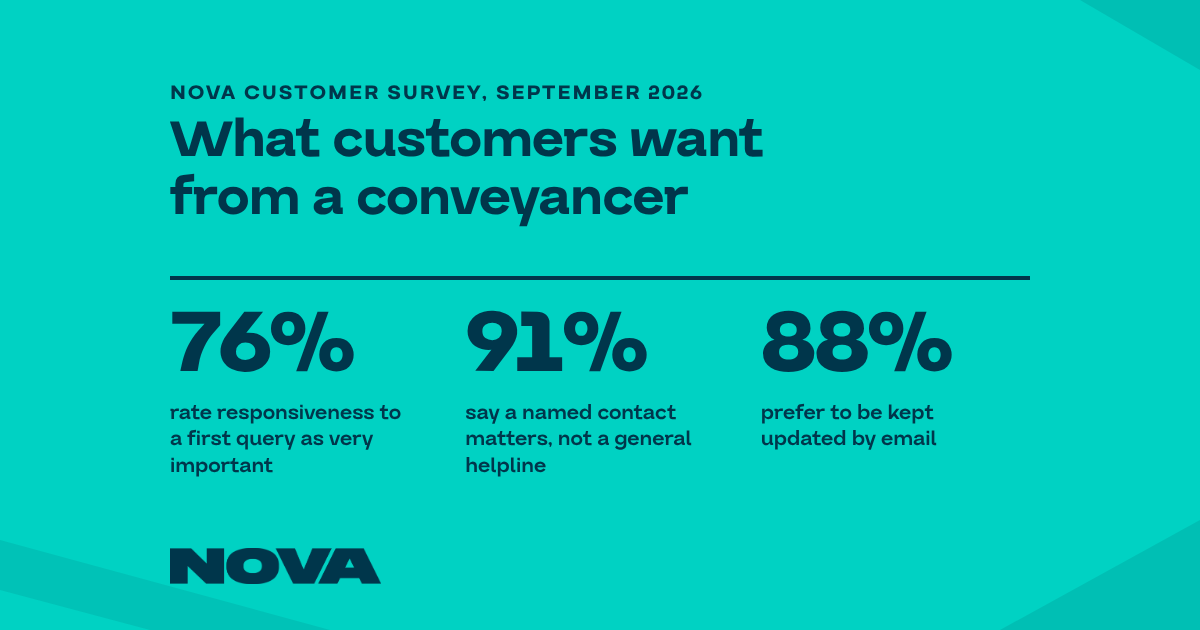
According to Nova Conveyancing’s September 2026 customer survey (n = 161), what customers want from a conveyancer starts with a prompt answer to their first query, a named contact and email updates. The findings matter most to the agents and brokers who recommend a provider, because 68% said that recommendation raised their trust.
Understanding what customers want from a conveyancer helps the estate agents and mortgage brokers who recommend one, because the recommendation carries their name. In September 2026, Nova Conveyancing asked its customers what they value when choosing and working with a conveyancer. This post sets out the headline findings and what they mean for referrers. The survey covers Nova Conveyancing customers only, so it describes the clients partners refer to us and not the whole market.
What do customers want from a conveyancer?
Customers told Nova Conveyancing that responsiveness to their first query matters most, with 76% rating it very important. Speed of the transaction came next at 70%, then their initial impression of the advisers at 67% and the strength of a recommendation at 60%. Figures show the share rating each factor “very important”.
| Factor | Customers rating it “very important” |
|---|---|
| Responsiveness to their initial queries | 76% |
| Speed of the transaction | 70% |
| Their initial impression of the advisers | 67% |
| The strength of a recommendation | 60% |
Speed here describes what customers value, and it does not describe how quickly any case will run. Timeframes depend on the case and on the other parties involved. The ranking suggests that how a provider handles the first conversation shapes a customer’s view before any legal work begins.
Why does a named contact matter to conveyancing customers?
Customers want one person to deal with: 91% said having a named contact, rather than a general helpline, is important or very important. This figure combines “important” and “very important”, unlike the factor ratings above. A named person for the client to ask can also mean fewer calls coming back to the agent.
Sales progressors in particular know the cost of a case where nobody can say who is holding the file. When a client cannot reach anyone, the call usually ends up with the agent or broker who made the recommendation.
How do conveyancing customers want to be kept updated?
Customers prefer email: 88% said they would rather be kept updated by email, and 57% want updates weekly rather than daily. A predictable weekly update appears to matter more to most customers than constant contact, although a minority want more. Agreeing the routine with the client at the start avoids guessing later.
For agents and brokers, this is a practical question to put to any provider: what is the update routine, how does it reach the client, and what do you tell us when there is nothing new?
How much does a recommendation from an estate agent count?
A recommendation from an agent carries real weight, because 68% of customers said it made them trust Nova Conveyancing more than finding a conveyancer themselves. Separately, 60% rated the strength of a recommendation as very important when choosing. A recommendation lends the referrer’s credibility to the provider, which also puts the referrer’s reputation behind the service the client receives.
This is why referrers are right to ask hard questions of any partner before recommending it. The client will connect the experience with the person who made the introduction.
How do customers feel about conveyancing fees?
Most customers expect a simple fee structure: 83% agreed that fees should be flat regardless of case complexity. Agents and brokers are often the first person a client asks about cost, so it helps to know how a provider sets out its fees and what extra costs can arise, such as searches and disbursements.
What does this mean for estate agents and mortgage brokers?
Referrers can use these findings as a short checklist when comparing conveyancing providers: first response, named contact, update routine, and how fees are explained. The questions below turn each finding into something you can ask a provider directly. Put the same points to every candidate so the comparison stays fair.
- First response: How quickly are calls and emails answered, and where is the standard written down?
- Named contact: Will my client have a named person, and can my progressor reach them?
- Update routine: How often are clients updated, by what channel, and how are delays reported?
- Fees: Are fees explained clearly at the start, and what can change them?
Nova Conveyancing leads with a named contact, clear email updates and a relationship-led approach, which reflects what customers told us they value. Its customer charter commits to answering calls and emails within 24 hours, sooner if urgent, and to chasing other parties at least once a week.
What the survey cannot tell you
The survey measures what 161 Nova Conveyancing customers say matters to them. It does not compare providers, and it does not show how any firm performs against these priorities. Stated importance is a useful guide to what clients notice, but it is not a measure of delivery, so referrers should still test any partner against the same questions. If you would like to see how Nova Conveyancing answers them, the Partner With Us is the place to start.
The survey covered 161 Nova Conveyancing customers and was carried out in September 2026. It asked what customers value when choosing a conveyancer and how they prefer to be kept informed. Because it covers only Nova Conveyancing customers, it shows what this group values and does not describe the whole market.
Not with confidence. The sample is 161 customers of one provider, so the results describe what Nova Conveyancing’s customers told us. They may point to themes that matter to clients elsewhere, such as responsiveness and a named contact, but anyone relying on them for wider conclusions should treat them as indicative only.
No. It shows that 70% of customers rated speed of the transaction as very important, which is what they value, not what any case achieves. Timeframes depend on the case and on the other parties involved. Nova Conveyancing offers fast track options, with timeframes starting from 7 weeks to exchange.
Ask how often clients are updated, by which channel and what happens when a case has no news. Ask who the named contact is and how your sales progressors reach them. In the survey, 88% of customers preferred email updates and 57% wanted them weekly, so an agreed routine is a sensible starting point.
Sources
- Nova customer survey, September 2026 (n = 161 Nova customers)
You might also like

By Cara Stanbridge, Head of Relationship Management at Nova Across the UK property market, ...

A small estate agency should choose a long-term conveyancing partner on three things: how ...